Rope Cockling Information
Cockling (unravelling against the lay of the rope)
Cockling occurs when a fixed 3 strand construction warp is forced to rotate against the direction of the twisted lay, opening up the strands until they distort into ‘ears’
This will eventually be the case if a yacht continually swings around its mooring ‘the wrong way’.
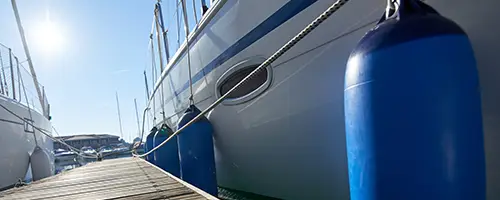
This can also happen with 3 strand fender lanyards where your fenders are subjected to persistent rotation caused by the continual movement between the topsides and the pontoon or adjacent yacht.
This can be avoided by selecting Braid on Braid Fender Lanyards
You can sample the cockling effect with a soft piece of small diameter 3 strand rope – Twist it tighter and the rope construction tightens – Twist it the other way and the strands will soon deform and the rope will go completely out of shape, compromising the performance of the line, with the distinct possibility of failure through rupture.
This may not look like it can happen in a large diameter strop.
When a large diameter nylon warp is first introduced into contact with seawater and used in anger the fibres shrink, the lay of the rope tightens and the end result is a stiff rope akin to an iron bar, that doesn’t look like it could possibly unravel, but it certainly can in conditions where the force of the rotational twist in the unlaying direction is both strenuous and persistent.
Cockling cannot happen with Anchorplait – It doesn’t matter which way the rope is twisted, it only tightens the lay.
Acute and persistent cockling can eventually progress to the unravelling of a perfectly constructed 3 Strand Splice